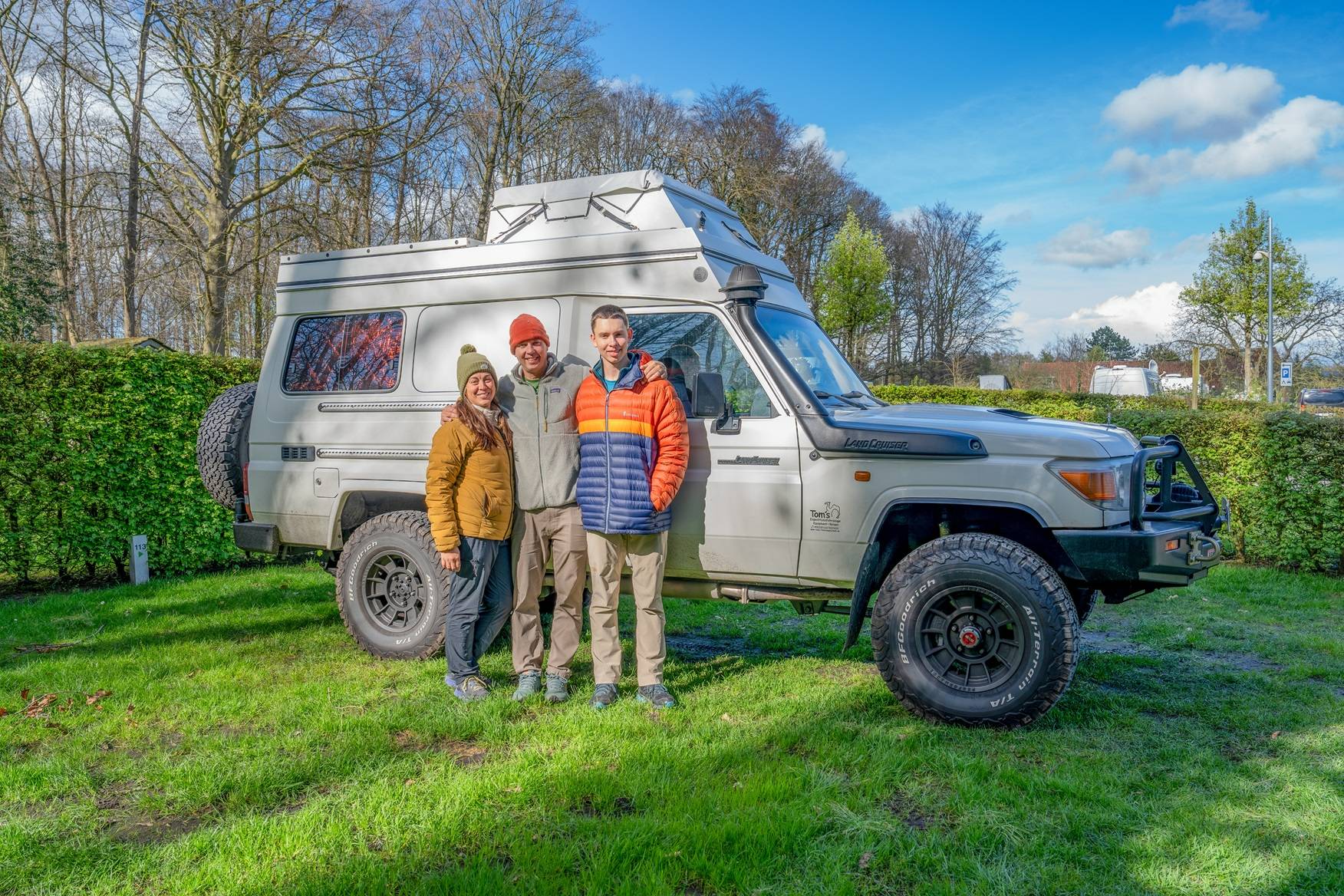


We finally got Dusty the Mudslinger loaded in a shipping container and bound for Cartagena, Colombia. The process took a few days, but thanks to our friends over at The Overland Embassy, the process went without a hitch.
Firstly, we had to do the police inspection. This is required for all vehicles leaving Panama. I’m not exactly sure if it’s required to drive North from Panamá, especially since you have a TIP and will be entering the other countries to the North, with your vehicle. I know it’s required going anywhere you aren’t arriving in your vehicle.
The police inspection consists of two parts. The first, arrive at the inspection station early, we arrived at 6:45 AM and we were already number 7. When you arrive, there will be someone to get you a number. Once you have this number, and the inspections start, you will be required to stand in line numerically. Anyone who forgets their documents gets immediately turned away. To be successful in your inspection, you must bring two copies and the originals of each: your passport face page, the vehicle title and vehicle registration and the TIP documents as well. You will be required to get the vehicle inspected where they will scrub the VIN number of your vehicle. For Panamanian vehicles leaving, they also take the motor number. We have a US registered vehicle, so they didn’t scrub the motor number, just the VIN from the Chassis. When I asked the inspector, he said they only do it for Panamanian vehicles, not foreign vehicles that are leaving.

After the vehicle gets inspected, which consists of literally reviewing the TIP and the vehicle documents to make sure names and VIN numbers match, then scrubbing the VIN to attach to the documents you’ve already provided, the inspector will hand you the papers back and you will then stand back in line to hand the documents to the original man who checked the documents first. He will tell you that everything is good, and that tomorrow you have to go to the DIJ building and pick up the Permiso de salida, then you can leave.
Part two consists of retrieving your official Exit Permit. You must go to the DIJ office around 10:30 AM and tell the guard that you are there to pick up the Permiso de Salida. We reiterated we were there to get the papers for a foreign vehicle (Permiso de salida para vehiculo extranjero). I told the guard this because there was a really long line of people waiting, and I didn’t know if they were all waiting for the same thing. The guard told me that only one person was allowed to enter the building, the person whose name is on the TIP. Bronson’s name was on the TIP with me as a registered second driver. (They say “the owner of the vehicle,” and we’re both owners of the vehicle, so they usually take the first name on the Title.) It took Bronson about an hour and a half to finally come out of the building with our official document in hand, permitting us to load on a container to leave the country.
Secondly, we needed to get all of these documents to Overland Embassy who was taking care of all of our shipping needs. They are so awesome there, I can’t even tell you… They take care of all the logistics from start to finish on both continents. They have an entire team dedicated to the shipping and receiving of vehicles. They guide you through the entire process, they tell you every document you need and every copy you need to make. On your loading day, you will get the TIP cancelled for the vehicle, the passport stamped with “autorizada la salida de este viajero sin su vehiclulo” Which means this traveler is authorized to leave without their vehicle. Having that stamp allows you to take your flight to your next country.

Overland Embassy was able to find us 3 container buddies, which shared our container and cut the costs for us. We loaded a Ford F-150 with camper, our vehicle and two motorcycles into a 40 foot container, with maybe a foot to spare. Between our vehicles and the two motorcycles splitting the cost, our portion cost roughly $850, down from $1200 each for our vehicle and the truck on the Panama side. Cost is divided by percentages when you have motos hitching a ride with you. They are smaller and take up less space, so their shipping costs are less. Colombia has their own port requirements and they have their own costs associated with the transit so they charge separately, but to ship with the additional two motos, saves us an additional $200 in Colombia.


When Overland Embassy receives the Bill of Lading from the shipping company, which usually happens within 24 hours, they send you a copy and this serves as proof of onward travel. Ours didn’t come before our flight, and the gate agent at Avianca asked for our proof of onward travel. I told him I had the police inspection for our vehicle and the original TIP and he said those were perfect. It was all he needed. They allowed us to board the flight without incident.
When we arrived in Colombia and went through customs, they asked how long we would be in the country. We’re allowed 90 days, so we told them 3 months. They asked about our return ticket, and we told them that we were waiting for our vehicle to be shipped to Cartagena. They looked at our folder of car paperwork but didn’t even open it and stamped us in with 90 days. So far so good.
We were advised by Overland Embassy to stay near the port of Cartagena until the vehicle is out of port because the shortest amount of time that will be given is one hour. Meaning, they’ll call you and say “hey, you need to be at the port in an hour.”
After spending a week in Cartagena and coming to understand that even though we were 12 minutes away by car, during high traffic hours, that trip turns in to at least 45 minutes. It’s actually faster, but not safer to walk.
The vehicle removal from port is a very lengthy process. It takes three days to get it out from the shipping container and out of the port. Why? Well, because it’s a little disorganized. Overland Embassy and their constituents in Colombia take all the guesswork out of it and deal with all the bureaucracy. They talk to the port officials and get all the information and relay it to us. They tell us where to meet, what time and all the things we need to bring and not bring with us. They make the process very easy.
The first day, is signing the receiving papers showing that the cargo ship had been delivered and getting the TIP and driving Dusty out of the container. Then we had to leave Dusty and the keys with the officials. You have to leave the keys because there is a chance that they’ll have to move the vehicle to accommodate other shipping cargo in the space you’re in. They take their port security very seriously, so we felt safe to leave the keys. The second day you have to go back to port to get all the paperwork and the TIP so you can be shuttled to SOAT to pay for the insurance for the vehicle, which doesn’t take effect until the following day, so legally you’re not SUPPOSED to drive your vehicle until the following day but people do it often. The third and final day, we got to drive Dusty off the Port lot and she was free to take us to wherever we wanted to go in Colombia!
Things to note…
1) Whatever is in your vehicle must stay in the vehicle until you drive it off the lot.
2) You cannot bring anything to the port with you, no bags. Just your wallet and passport and car paperwork. If you do bring a bag, Ana has a place that you can lock it up.
3) You cannot put anything in your vehicle that wasn’t already there. They take their security very seriously. Not even the workers can bring things into Port.
4) You must wear LONG SLEEVES and LONG PANTS to enter the port. If you don’t have anything, If you ship with Overland Embassy or use Ana Rodriguez, they will provide a long sleeve shirt for you. Pants… You’re on your own.
5) It is HOT in Cartagena! There are a few places to stay in the shade at port, but make sure you’re hydrated BEFORE you go.
6) Only the driver is allowed to enter port. They want to minimize the amount of traffic that comes in and out for security of all cargo entering the port.
7) Bring your keys! Every time you go to port. One of our group had left his keys and had to have his wife catch a cab to bring the keys to port. It wasn’t a huge deal to all of us container buddies, but he was really embarrassed.
8) If you have container buddies, all of you must be there onsite together before ANY of these things will happen, each and every day. All of us want to get our vehicles, so most container buddies are going to be on time, early even.
If you’re traveling by vehicle, like us, Que la vaya bien y bienvenidos a Colombia disfruta el viaje! It’s an amazing country, we hope you love it as much as we do!