

After returning from the Amazon, we took a short flight to the Pacific Coast to Bahía Solano. We’d been wanting to explore this region since arriving in Colombia. Mostly because we know it’s fairly inaccessible and as such, probably less inhabited, less touristy and more authentic. Even searching for flights took a few days, but we were able to finally find one. We took a hopper flight from Bogotá to Medellin to Bahía Solano. It’s the largest airport and cheapest to fly to, yet was barely more than a paved landing strip with a few buildings. Once we touched down in Bahía Solano, we went through a short immigration check. Basically, they made you pay a tourist fee of 30,o00 pesos per person, which was the equivalent of about $7.00. Cash only. Then you wait for your bags.
When you finally get to leave the airport, you’ll see a few tuk-tuks that are waiting to take people to their next destination. If you haven’t pre-booked a ride, this will likely be your only option. We did our research before arriving and knew there was only one ATM for the entire coast, and it is notorious for running out of money. We quickly grabbed a tuk-tuk and requested to go directly to the ATM. We were able to withdrawal money without a problem and then a huge line started to form behind us. Don’t worry if you didn’t bring money. Some places take cards, others will take bank transfers and there are Western Union locations throughout the coast. However, they don’t always have a lot of money, so if you need to get money from a Western Union, don’t transfer more than a couple hundred dollars worth, or they may not be able to distribute the money.


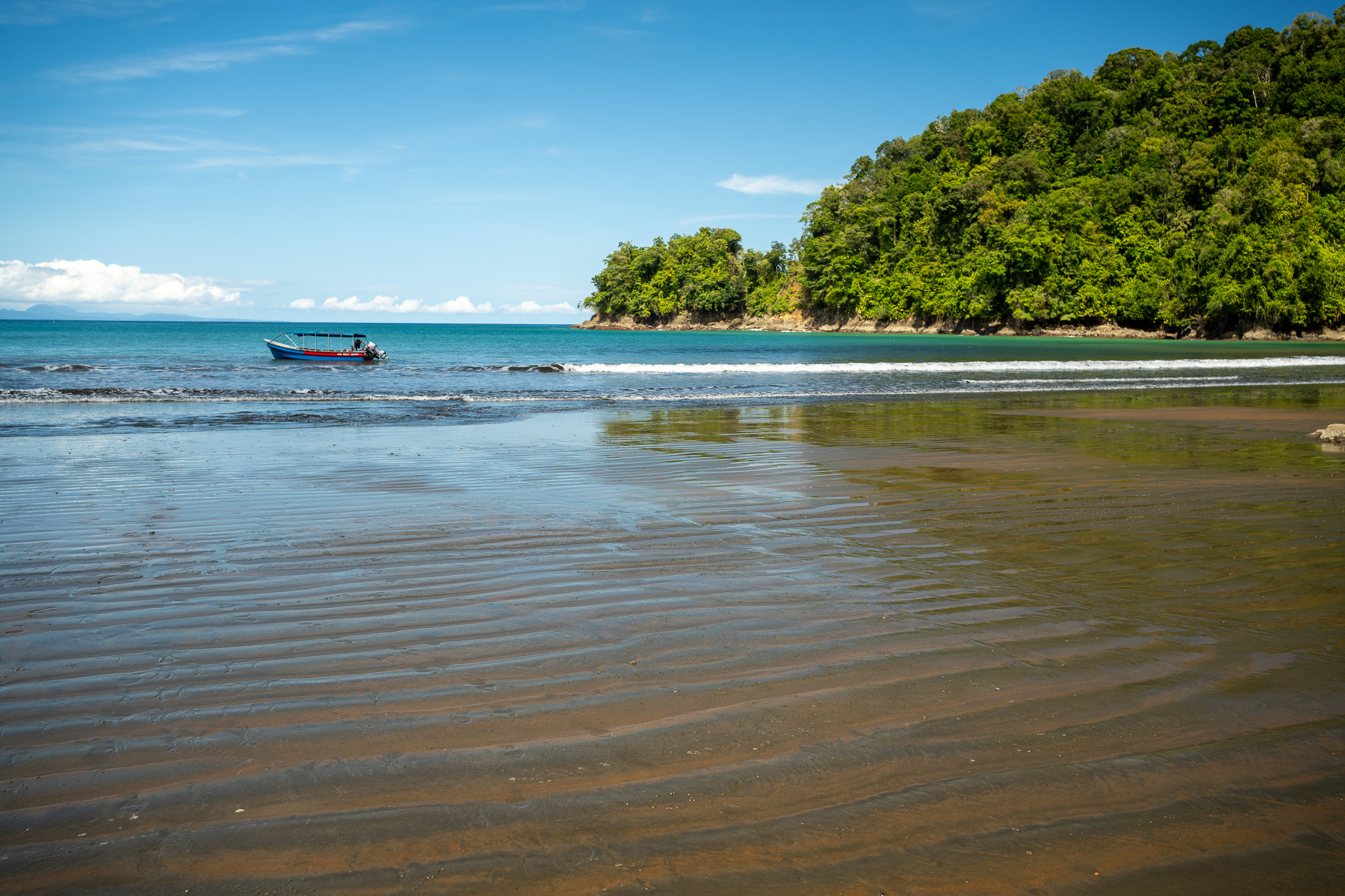
Once we finally had what we needed, we then took a 40 minute tuk-tuk ride down intermittently paved dirt roads to the town of El Valle. The tuk-tuk driver drove us along the sandy beach at low tide and got to a point where the tuk-tuk couldn’t go any further and we walked to our hostel from there. It was hot, muggy, and the sun was searing even through the cloud cover. We spent the rest of the day talking with other travelers and the locals who were having a birthday party out in front of our hostel. We watched as the locals prepared delicious smelling food. The kids played limbo, dug holes in the sand and buried each other in them. They played on slack lines and raced to climb trees. It was such a delight to watch the kids just be kids and free play. The parents were around if one of the kids got seriously hurt, but beyond that, the kids were left to figure things out themselves. A far cry from the type of parenting we continue to see in the USA. We watched the sunset over the ocean as we listened to the laughter and excited yelps of the kids fade away with the sun.


That night a severe thunderstorm rolled through. The thunder crashing was so loud you couldn’t hear the person next to you who would be yelling and the lightning strikes were so bright it was as if someone turned the lights on in a pitch black room. Nobody really slept well that evening. The power went out and there was no fan to circulate the air, so it remained hot, muggy, and mosquito infested. The saving grace was that we had a mosquito net, but without circulating air, it was pretty miserable as far as heat and humidity goes.
As morning approached and the storm died down, we took a walk into town, where we treated ourselves to the “menu del dia” at a local restaurant. The pacific coast of Colombia is well known for its soups, and let me tell you, they were all delicious. Everyday there is a new soup being prepared depending on the fresh ingredients the restaurant picked up that day and what fish or meat was available from the local vendors. Everything was as fresh as you can get. Being that supplies are limited on the coast, when the restaurant runs out of something, there is nothing to replace it with and if they have nothing left to serve, they will just close up with no warning. So if you happen to come across a restaurant that says it’s open, but the doors are closed, it’s likely they ran out of food to serve.
After breakfast, we walked around town and booked our transportation to Nuquí for the following day. It was really easy. We walked up to a hole in the wall kiosk with very faded pictures of the nearby attractions. We booked our tickets which were relatively cheap I think it was around 72,000 pesos, which was roughly $15-20 USD. From there, we took respite from the heat of the coast by hanging out at the hostel and drinking cold beverages and lazing around in the hammocks. As the day slipped away to evening, we sat at a communal table, eating our freshly prepared meal while meeting other travelers from around the globe and sharing stories of each others travels and experiences.
The following morning, we packed up, “waterproofed” our backpacks and set out to meet our boat that would be taking us to Nuquí. There is no port where you can walk out and load onto the boat. Here, time runs slow and everything is dependent upon the tide. You literally have to wait for the tide to come in, walk out in the water to your boat, load your bags (they will load them for you if you want) and then climb into the boat. Then you wait for the tide to be big enough that the captain can start the engine and get you out into the open sea. We had to wait for about three hours before we could load onto the boat, and let me tell you, I am not kidding when I say this boat ride is not for the feint of heart.
I don’t know if we were just really unlucky or if this happens a lot, but getting out to the open sea was AWFUL. The waves coming in were huge and the boat wasn’t. We were packed in like sardines on this little boat, there were at least 20 of us and the boat had to use every ounce of power from the double outboard engines to cut through the waves that were pounding against the shoreline. Not once, but twice, the wooden seatback of the row in front of us became dislodged from its tracks and crashed down on my kneecaps. It was so painful, I actually screamed out in pain. The entire front row of people had fallen backwards onto the people in our row and we had a very difficult time getting the seatback back into its slot.
It took a good 45 minutes to reach the town of Nuquí, and when we off loaded, I could barely walk. I was in so much pain, both my knees were swollen and bruised, Kaden had one knee that was bruised and it left me limping around for three days. All the captain could say was he was sorry. No fucker. That’s not good enough. I certainly voiced my displeasure with the way the captain handled the situation and told him that he put everyone in danger continuing the way that he did. The crew and captain were very remorseful, but that doesn’t mean anything will change. We all made it in one piece and took the rest of the day to recover and look for tours.
Fortunately for us, getting here was the worst part. The following days would be some our most memorable in Colombia.
You can check out the video on our Youtube channel or click on the video below.